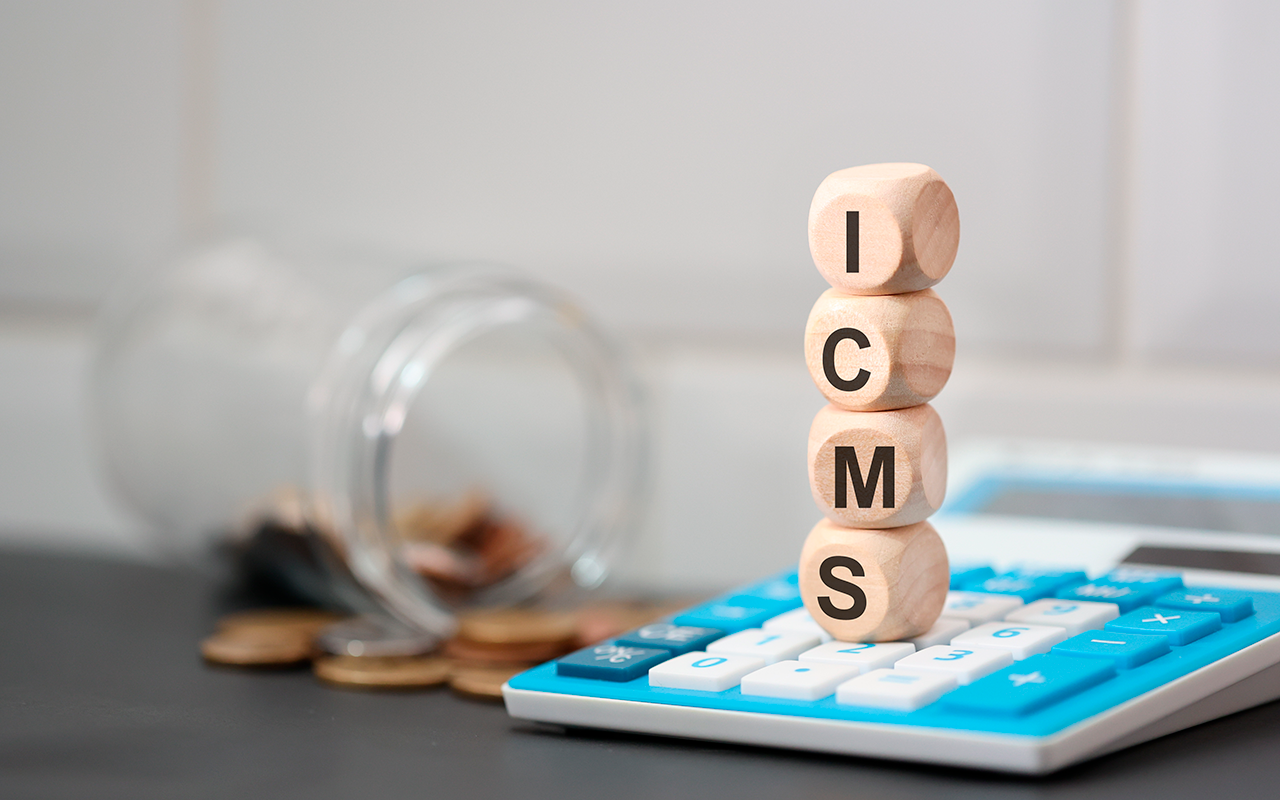
The Superior Court of Justice (STJ) has referred Issue No. 1,372 for binding review under its repetitive appeals framework to determine whether the ICMS rate differential (ICMS-Difal) must be included in the tax bases for PIS and Cofins, two federal social contributions levied on corporate revenue.
The ruling could directly affect companies engaged in interstate sales subject to ICMS-Difal, particularly in relation to current tax payments, ongoing disputes, and potential recovery of amounts unduly paid.
ICMS-Difal is a portion of state VAT due when a company sells goods to a consumer located in another Brazilian state. The central issue is whether this amount, which the company merely collects and remits to the state treasury, should be treated as part of its gross revenue or excluded from the tax bases for federal contributions.
The controversy can be understood as an extension of Issue No. 69, in which the Federal Supreme Court (STF) held that ICMS should not be included in the PIS and Cofins tax bases. Following that rationale, the STJ’s First Panel held in REsp No. 2,128,785/RS that ICMS-Difal should also be excluded from those bases because it does not constitute the taxpayer’s own revenue, but merely a financial inflow remitted to the state treasury.
Key Legal Implications
The matter has also gained relevance at the administrative level. The Brazilian Federal Revenue Service has recognized Opinion SEI No. 71/2025/MF as applicable to the issue, signaling that the STF’s rationale in Issue No. 69 may also extend to ICMS-Difal, subject to the Supreme Court’s limitation of effects. Within the RFB, the binding date is recorded as 28 August 2025.
Despite these judicial and administrative developments, the issue still awaits final guidance from the STJ’s First Section under the repetitive appeals system. The stay ordered upon referral applies to special appeals and related appeals involving the same matter, whether pending before lower courts or before the STJ, helping stabilize the debate until a final ruling is issued.
The STJ’s ruling on Issue No. 1,372 may ultimately confirm the extension of the STF’s position in Issue No. 69 to ICMS-Difal, with significant implications for both current tax payments and the recovery of amounts unduly paid.
Recommended Next Steps
Companies engaged in interstate transactions subject to ICMS-Difal should:
- Review current PIS and Cofins calculation procedures involving ICMS-Difal
- Assess ongoing judicial and administrative disputes on the matter
- Evaluate potential refund or offset opportunities for amounts unduly paid
- Monitor the STJ’s final ruling on Issue No. 1,372
The referral of Issue No. 1,372 represents an important step toward greater legal certainty and should be closely monitored by taxpayers affected by ICMS-Difal.