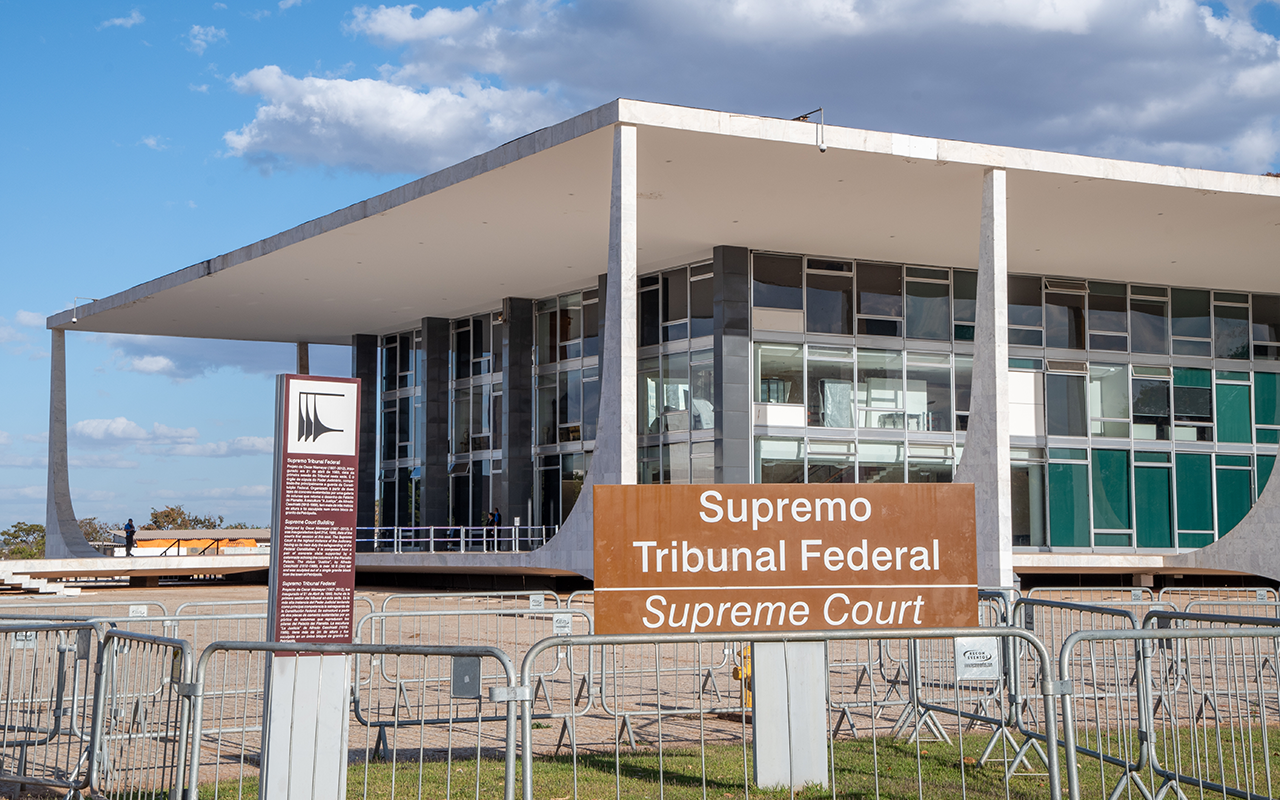
Court fee waivers have been the subject of considerable debate in Brazil’s legal community, particularly given the lack of consistent criteria across courts. This prompted the Federal Supreme Court (STF) to examine the constitutionality of the rules set out in the Consolidation of Labor Laws (CLT).
Against this backdrop, in September 2026, the full bench of the STF ruled on Declaratory Action of Constitutionality (ADC) No. 80, filed by the National Confederation of the Financial System (Consif). The case concerned paragraphs 3 and 4 of Article 790 of the CLT, as amended by the Labor Reform, as well as item I of Case Law Statement No. 463 of the Superior Labor Court (TST).
The Court struck down the language tying the presumption of financial hardship to earnings of no more than 40% of the cap on benefits under the General Social Security Regime (RGPS). Pending legislative action, the Court replaced it with a rebuttable presumption of financial hardship for individuals earning a salary at or below the threshold set in Law No. 15,270/2025, currently BRL 5,000.
According to the STF, any changes to income tax legislation will automatically be reflected in this threshold. If the income tax table is not updated annually, the threshold must be adjusted for inflation using the Broad National Consumer Price Index (IPCA). The rebuttable presumption of financial hardship also applies to individuals represented by the Public Defender’s Office.
The Court also declared item I of TST Case Law Statement No. 463 unconstitutional. As a result, an individual’s declaration of financial hardship alone is no longer sufficient to qualify for a court fee waiver.
Although the case concerned provisions of the CLT, the STF ruled that the new criteria must apply to all branches of the judiciary, not just labor courts, pending legislative action. The only exception is proceedings at first instance before the Small Claims Courts, which remain subject to the rules established by Law No. 9,099/1995. The Court also ordered the Superior Court of Justice (STJ) and the TST to review their case law, including rulings issued under the repetitive appeals procedure.
Following the ruling, individuals earning BRL 5,000 or less benefit from a rebuttable presumption of financial hardship. However, a judge may set aside the presumption if the applicant’s assets or household income are inconsistent with the claimed financial hardship, taking into account proportionality and the competing interests in each case.
Individuals earning more than BRL 5,000 must demonstrate that they lack sufficient financial resources to cover litigation costs, based on the circumstances of their case, as required by Article 790, paragraph 4, of the CLT.
The STF also clarified that applicants bear the burden of proving their income or financial hardship. Under Article 99, paragraph 2, of the Code of Civil Procedure, judges may require additional supporting documentation.
The Court limited the ruling’s effects to prospective application (ex nunc), effective from the publication of the minutes of the judgment on the merits on 16 September 2026. Accordingly, the new criteria apply only to proceedings filed on or after that date.
In light of these developments, legal counsel plays a particularly important role in assessing and challenging applications for court fee waivers. Key considerations include evidence of income, the applicant’s actual financial circumstances, and any assets that could rebut the presumption of financial hardship established by the STF.
Glossary
Federal Supreme Court (STF): Brazil’s highest court for constitutional matters, responsible for reviewing the constitutionality of laws and government actions.
Consolidation of Labor Laws (CLT): Brazil’s principal body of labor legislation, governing employment relationships, employee rights, and employer obligations.
Declaratory Action of Constitutionality (ADC): A judicial proceeding before the STF seeking confirmation that a federal law or regulation complies with the Brazilian Constitution. The resulting decision has binding effect.
Labor Reform: The 2017 overhaul of Brazilian labor legislation introduced by Law No. 13,467/2017, which amended several provisions of the CLT.
Case Law Statement (Súmula): A formal statement issued by a Brazilian court consolidating its interpretation of a legal issue based on established case law. Its binding effect depends on the issuing court and the type of statement.
Superior Labor Court (TST): Brazil’s highest court specializing in labor law, responsible for promoting consistent interpretation of federal labor legislation.
General Social Security Regime (RGPS): Brazil’s main public pension and social security system, primarily covering private-sector employees and other eligible workers.
Broad National Consumer Price Index (IPCA): Brazil’s official benchmark inflation index, calculated by the Brazilian Institute of Geography and Statistics (IBGE).
Public Defender’s Office (Defensoria Pública): A constitutionally established institution providing free legal assistance and representation to individuals who lack sufficient financial resources.
Small Claims Courts (Juizados Especiais): Brazilian courts that handle certain lower-value and less complex disputes under simplified procedures, including rules established by Law No. 9,099/1995.
Superior Court of Justice (STJ): Brazil’s highest court for most nonconstitutional federal-law matters, responsible for promoting uniform interpretation of federal legislation.
Repetitive Appeals Procedure (Recursos Repetitivos): A procedural mechanism through which Brazilian higher courts decide a common legal issue raised in multiple appeals, establishing guidance that must be followed in similar cases.