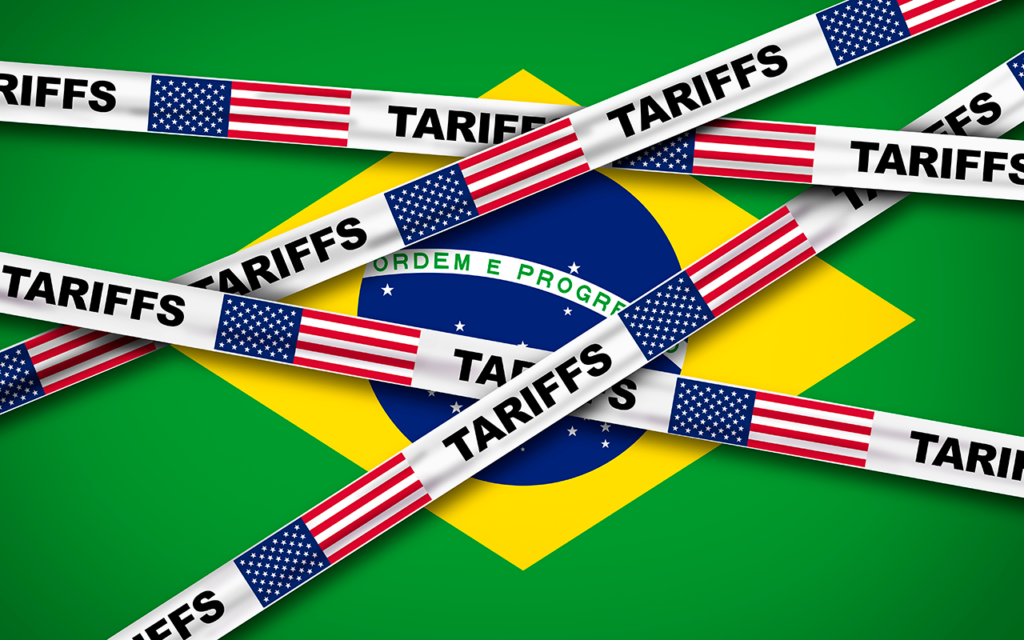
On Thursday (23), the United States announced a new round of additional tariffs on imports. The measure imposes additional duties ranging from 10% to 12.5%, based on investigations conducted by the United States Trade Representative (USTR) regarding the adoption of measures to combat forced labor.
Brazil was subject to the highest additional tariff of 12.5%. As this measure is cumulative with the 25% tariff announced the previous week on a broad range of Brazilian products, certain Brazilian exports could be subject to a combined tariff rate of 37.5% when entering the U.S. market, regarding the exceptions in Annex I of Section 232.
Unlike the 25% tariff, which was specifically targeted Brazilian products, the new measure has a global scope and applies to imports from 59 other countries. According to the U.S. government, the initiative aims to encourage the affected countries to strengthen measures to prevent forced labor throughout their supply chains.
Affected countries
Additional tariff | Countries |
10% | Argentina, Bangladesh, Cambodia, Canada, Ecuador, El Salvador, Guatemala, Honduras, India, Indonesia, Jordan, Malaysia, Mexico, Pakistan, Sri Lanka, United Kingdom, and Trinidad and Tobago |
10% of the net MFN tariff | European Union and Taiwan |
12% | Algeria, Angola, Australia, Bahamas, Bahrain, Brazil, Chile, China, Colombia, Costa Rica, Dominican Republic, Egypt, Guyana, Hong Kong, Iraq, Israel, Kazakhstan, Kuwait, Libya, Morocco, New Zealand, Nicaragua, Nigeria, Norway, Oman, Peru, the Philippines, Qatar, Russia, Saudi Arabia, Singapore, South Africa, Thailand, Türkiye, United Arab Emirates, Uruguay, Venezuela, and Vietnam. |
12.5% of the net MFN tariff | Japan, South Korea, and Switzerland |
The new tariffs took effect on Friday (24) and provide exemptions for certain categories of products, including:
- raw materials whose taxation could jeopardize the supply of essential goods in the United States;
- products whose additional duties could have a significant adverse impact on the U.S. economy;
- goods that cannot be produced or sourced in sufficient quantities within the United States;
- products whose exemption could encourage the effective adoption of measures to combat forced labor; and
- articles for which the additional duties would not substantially contribute to the objectives of the USTR investigation.
Business impacts
The new measures reinforce the ongoing tightening of U.S. trade policy and require close attention from companies exporting to the United States. In addition to determining whether their products are subject to the new tariffs, businesses should assess the applicability of the available exemptions, the impact on existing agreements, pricing strategies, and potential alternatives to mitigate the effects of higher import costs.